Through many discussions with industry colleagues, we’ve started hearing a phrase more often when swapping stories about AI adoption:
“Now I don’t have to bug [someone].”
Product designers don’t need to bug researchers anymore — retrieval-augmented generation (RAG) tools surface insights instantly. Product Managers don’t need to bug designers for mockups — AI generates acceptable options. Engineers don’t need to bug accessibility teams — automated scanners flag issues in real-time.
It’s framed as liberation, and in many ways, it is. There’s genuine relief in being unblocked, in not having to wait, in solving problems independently.
With AI, we’re building a “bug-free workforce.”
But what if the bugs that AI is automating away — the quick questions, the small talk, the organic connections — are actually an important part of the scaffolding that builds and sustains healthy teams?
The Vanishing Scaffolding
Consider what actually disappears when we turn to AI assistance before engaging with a colleague directly. For instance:
- The 2-minute Slack exchange that turns into a 20-minute whiteboarding session.
- The “quick question” that reveals a fundamental misalignment.
- The accessibility review that becomes mentorship.
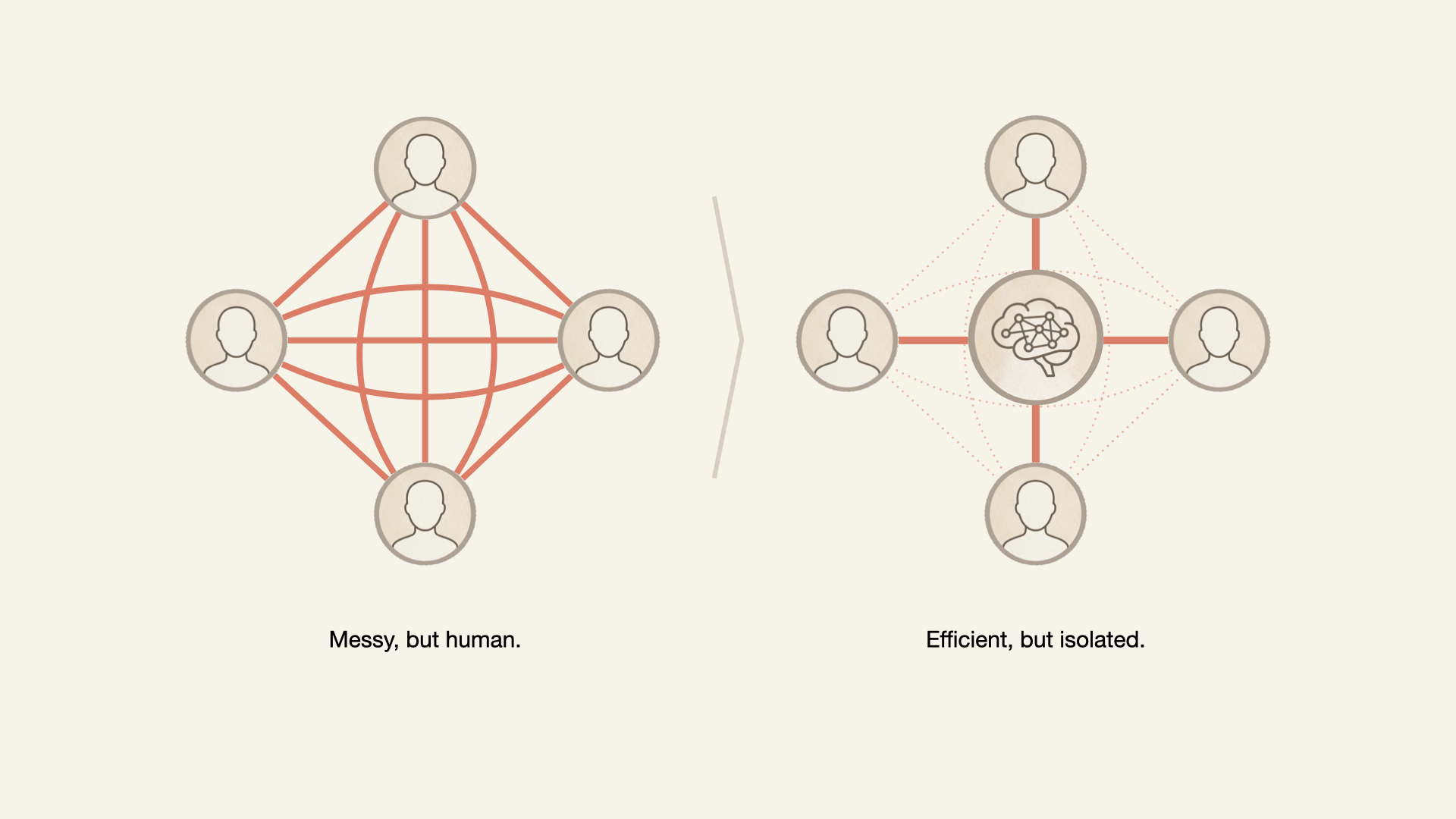
Although these interactions are primarily intended to exchange information and unblock individuals’ tasks, many are the building blocks for the intangible but crucial sense of belonging and connection in the workplace.
The inefficiencies of interpersonal communication and daily interaction build the larger organism known as work culture. When AI disrupts these interactions, what is lost?
What The Research Actually Shows
There is ample psychological research to support our hypothesis: if the trust built through organic and informal connections is threatened, teams will be negatively impacted. Let’s examine a few:
In 2012, MIT’s Human Dynamics Lab (Pentland, 2012) discovered that the best predictor of team productivity wasn’t formal meetings but “energy” from informal communication: the hallway conversations, coffee chats, and quick questions. Teams with the most informal interaction had 35% more successful outcomes. With AI, what energy is not generated, leading to fewer successful outcomes?
In 2015, Google’s Project Aristotle studied over 180 teams to find out why some thrived and others underperformed. They found that psychological safety — the shared belief among team members that the environment is safe for interpersonal risk-taking — built through frequent, low-stakes interactions, was the number one predictor of high performance. Not intelligence. Not resources. Trust built through micro-moments. The exact micro-moments we see vanishing when we overuse AI.
In 2025, researchers from Harvard, Columbia, and Yeshiva University published a study focused on the impact of AI on performance and team coordination. The authors concluded that AI-driven automation decreased overall team performance and increased coordination failures. These effects were especially large in the short-term and in low- and medium-skilled teams. Automation also decreased team trust.
Why This Matters
When AI disrupts the team’s energy and psychological safety, a sense of disconnection sets in, which in turn hurts the company’s bottom line.
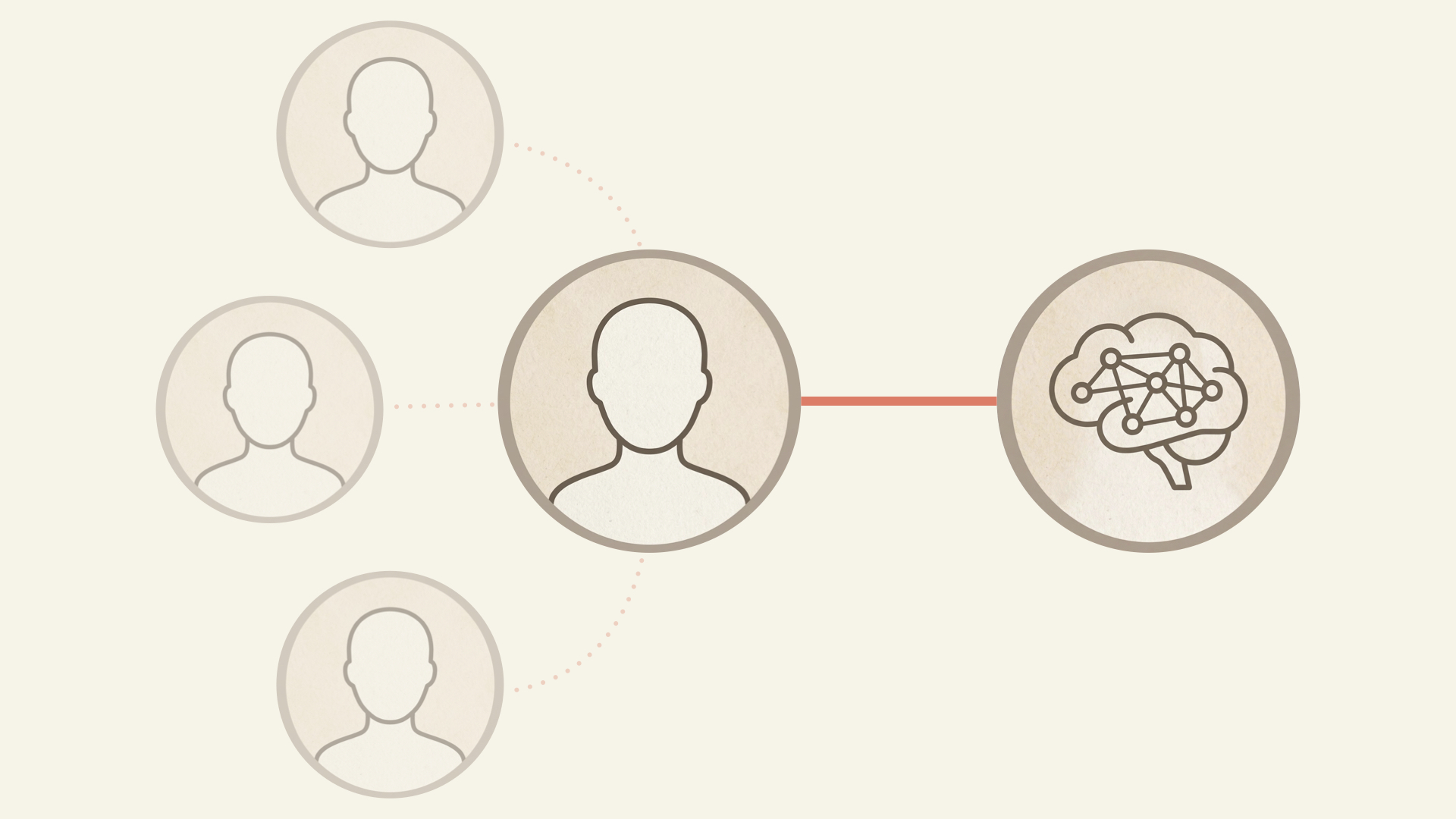
Disconnected Employees Leave
People don’t stay at companies because of the work. They stay because of the people. And if connections to colleagues decrease due to AI’s presence, how might that expedite one’s departure?
Consider this question in dollar terms. McKinsey’s Great Attrition research found that not feeling a sense of belonging was one of the most frequently cited reasons employees left. When informal micro-interactions disappear, belonging erodes, and people walk.
“Employee disengagement and attrition could cost a median-size S&P 500 company between $228 million and $355 million a year in lost productivity.”
— McKinsey
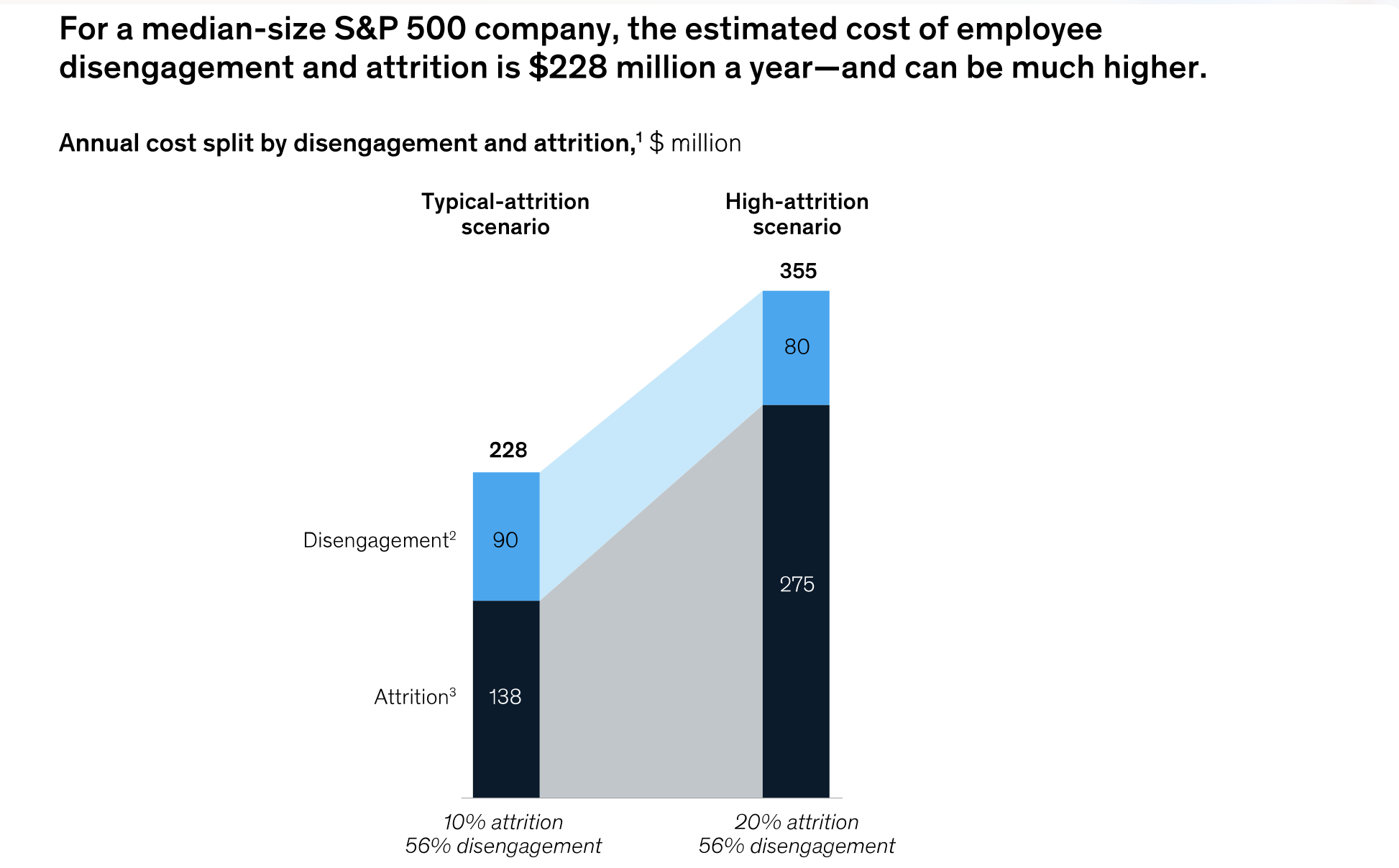
Leaders must ask themselves if the potential gains from AI rollouts and promised productivity gains outweigh the costs of a disengaged and attrition-prone workforce. The evidence suggests otherwise.
Disconnected Teams Are Less Innovative
Korean researchers in 2024 analyzed innovation in the private sector and concluded that weak ties — the bridging conversations with people you interact with occasionally — sustained innovative performance in companies characterized by active technological innovation.
Simply put, breakthroughs do not necessarily emerge from your core team but from interactions with the people you would have “bugged” in the past. Eliminating these interactions in favor of AI could not only negatively impact team health, but it could also hurt the business through decreased depth and breadth of innovation in design, coding, content, and beyond.
AI’s seduction is that it feels like pure gain — until the team realizes they’ve become strangers who happen to work on the same project. The efficiency is real, but so is the cost. Teams that recognize this tradeoff early, and intentionally preserve the informal human connections that AI quietly displaces, will be better positioned to innovate, retain talent, and sustain the psychological safety that high performance actually depends on.